Class B fire-rated profiles
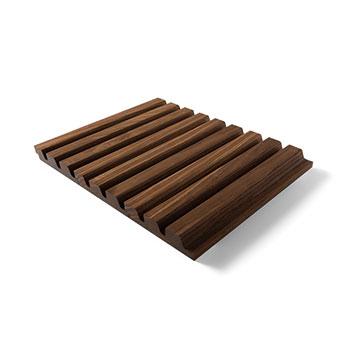
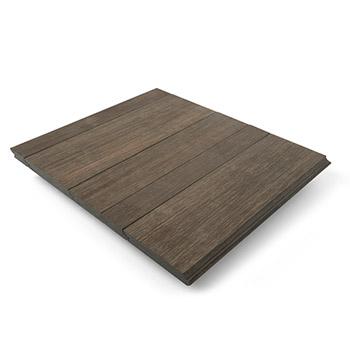
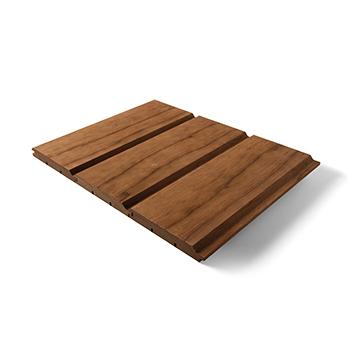
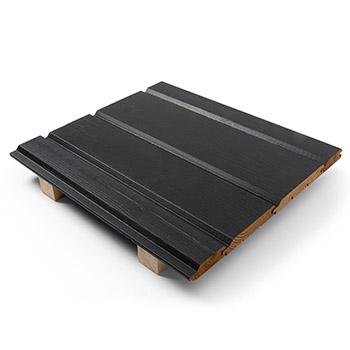
Show productsAt Carpentier, you will find various timber cladding profiles that meet Class B reaction to fire standards. Our thermo bamboo cladding qualifies for this reaction to fire rating without any additional fire-retardant treatment. For other wood varieties, we offer effective solutions to reach the same fire safety standards.
Class B reaction to fire timber cladding
For fire safety reasons, façades often need to meet Class B reaction to fire standards. Architects, entrepreneurs and property developers must provide the required reaction to fire certification. At Carpentier, you will find a wide range of timber cladding that comes with this certification, thus meeting the highest safety standards. The reports are available online and can be easily downloaded using your personal login.
Thermo bamboo: naturally safe
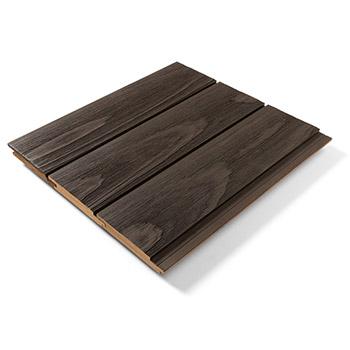
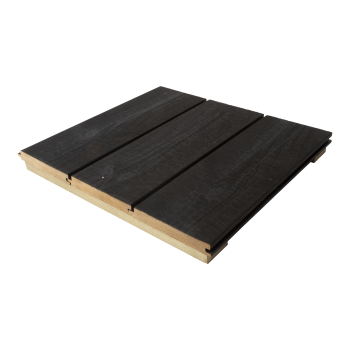
Our closed joint thermo bamboo cladding is a lasting option that meets Class B reaction to fire standards without additional treatment. So thermo bamboo is the ideal solution for projects in which fire safety and style are key.
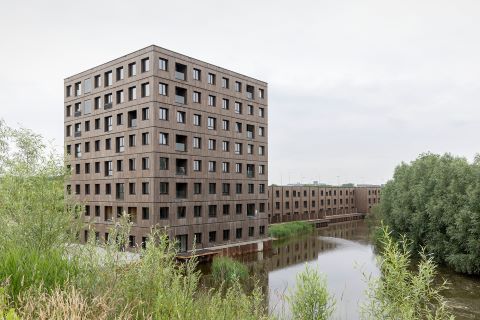
The Switi project in Amsterdam is a good example of this. Here our HOTwood bamboo shiplap QC was used as timber cladding. This closed joint cladding profile meets the B-s1, d0 reaction to fire standard without fire-retardant treatment. The biosourced new housing project won the National Timber Construction Award 2024 in the Netherlands in the serial timber construction category. This prize highlights the sustainable and innovative possibilities for this material.
Fire-retardant treatments for other wood varieties
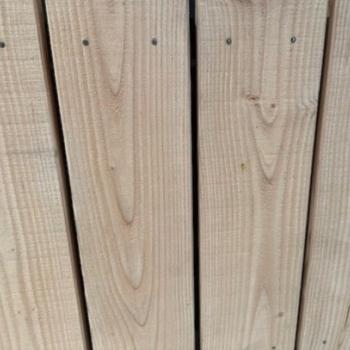
Sustainable wood varieties, such as thermo pine and ash, require fire-retardant treatment to meet Class B reaction to fire standards. At Carpentier, our fire-retardant treatment is carried out in vacuum conditions in an autoclave. This is a natural and effective method for improving the reaction to fire class. Thanks to this process, our cladding meets Class B reaction to fire standards, meaning you can create attractive façades that are fire-resistant.
Class B reaction to fire with traditional fixing systems
Class B reaction to fire can be achieved for closed timber cladding and vertical open-joint timber cladding, provided the cladding system is installed using traditional systems. In other words, ones where the cladding profiles are visibly screwed or nailed to the supporting structure.
This solution is suitable for projects where fire performance is a priority and visible installation is not an issue. Open-joint cladding is subject to specific conditions covering factors such as the species of wood, fire-retardant treatments, the installation method and the maximum gap between the profiles. Read more about the possibilities and requirements in our innovation blog on Class B reaction to fire open-joint timber cladding.
Class B reaction to fire with concealed fixing
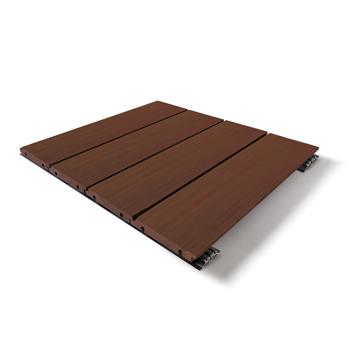
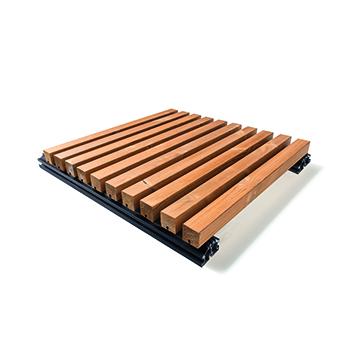
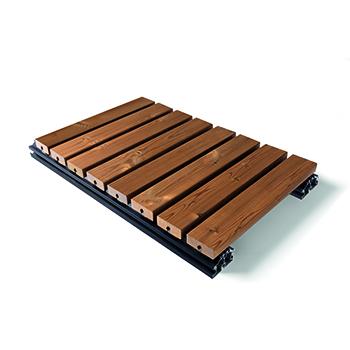
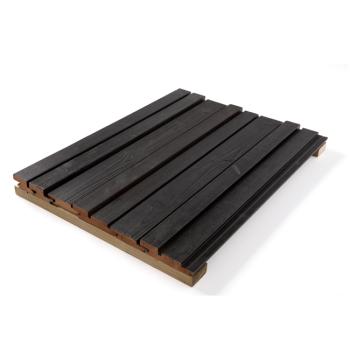
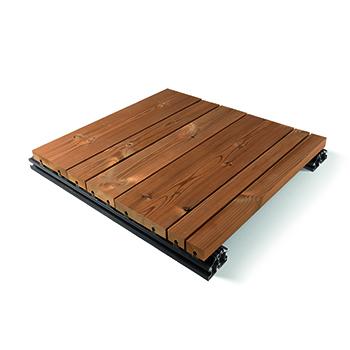
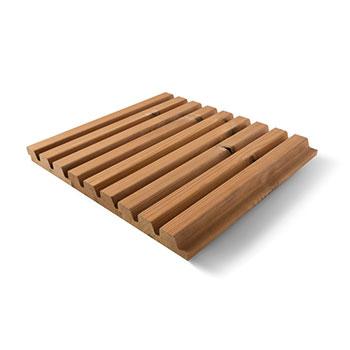
For projects requiring both high fire performance and a smart façade with no visible screws or nails, Carpentier developed an innovative solution in collaboration with Grad®: Pyroclip. This certified fire-retardant clip now makes it possible to achieve Class B reaction to fire standards with open-joint QuickClip® cladding, featuring a concealed fixing system and open joints of 30-35 mm. This combines the technical assurance of a fire-retardant cladding system with the aesthetic benefits of invisible fixing.
This development is a genuine first in timber cladding. It opens up new possibilities for fire-retardant, open-joint façades with a distinctive pattern, fast installation and a sleek, uniform finish.
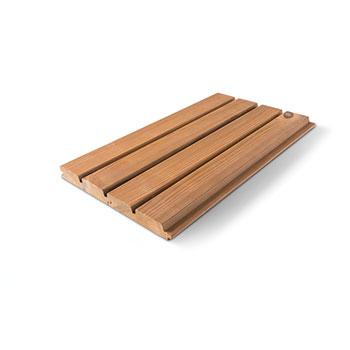
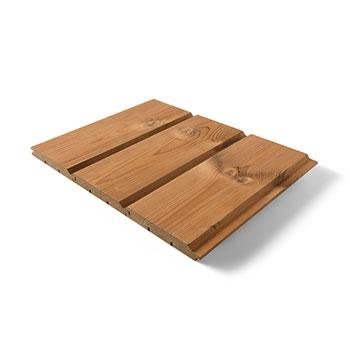
Our closed QuickClip® Shiplap profile also meets Class B reaction to fire standards. As this is a closed cladding system, the profile can be installed using the standard clips. This means that here too, Class B reaction to fire can be combined with a concealed fixing system, without needing the special Pyroclip.